
Anti-Pulsation Pressure Gauge
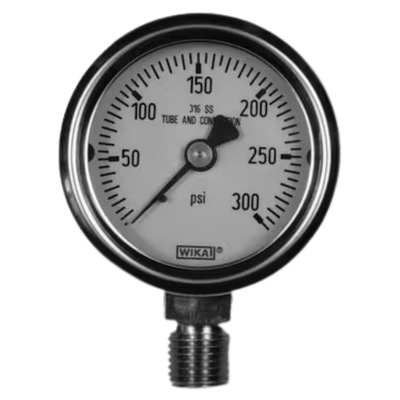
Anti-Pulsation Pressure Gauges are designed to handle pulsating pressure conditions typically found in systems with rapid pressure fluctuations such as pumps and compressors. These gauges provide steady and reliable readings by minimizing the effect of pressure surges and vibrations.
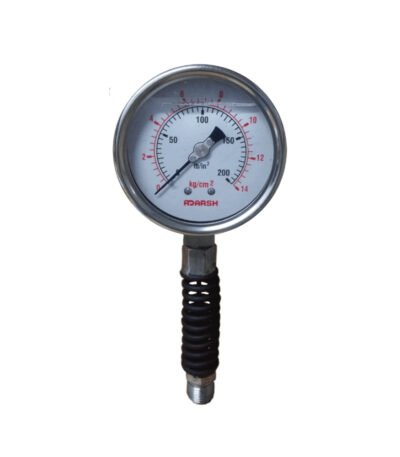
Antivibration Pressure Gauge
Antivibration Pressure Gauges are specifically designed for applications involving heavy vibration and mechanical shock. These gauges ensure stable readings and extended service life in rugged operating conditions.
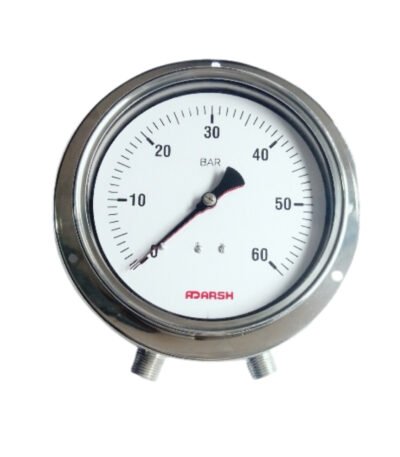
Duplex Pressure Gauge
Duplex Pressure Gauges are designed to measure pressure at two different points using a single instrument. These gauges are commonly used where simultaneous monitoring of two independent pressure lines is required, helping in comparison, control, and operational efficiency.
Each element operates independently with separate pressure connections, while the readings are displayed on a common dial for easy observation.
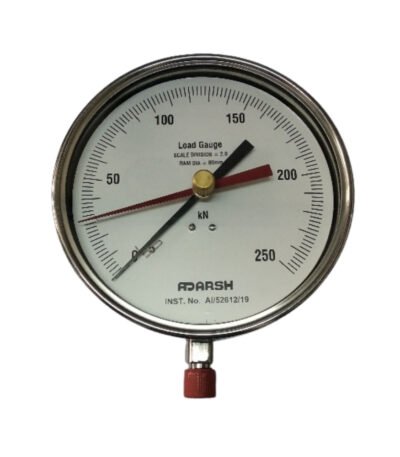
Load Gauge
Load Gauges are specialized pressure gauges designed to indicate load or force by measuring the hydraulic pressure in load-bearing systems. These gauges are typically used in applications where force is directly proportional to pressure, allowing the dial to be calibrated in load units such as kg, ton, or kN instead of standard pressure units.
They are widely used in hydraulic systems where monitoring applied load is critical for safety, control, and accuracy.

Maximum Pointer Pressure Gauge
Maximum Pointer Gauges are designed to record and indicate the maximum pressure reached in a system over a period of time. In addition to the normal pointer showing live pressure, these gauges are equipped with a drag pointer (maximum pointer) that remains at the highest pressure attained until manually reset.
They are widely used in applications where monitoring peak pressure is critical for safety, testing, and performance evaluation.
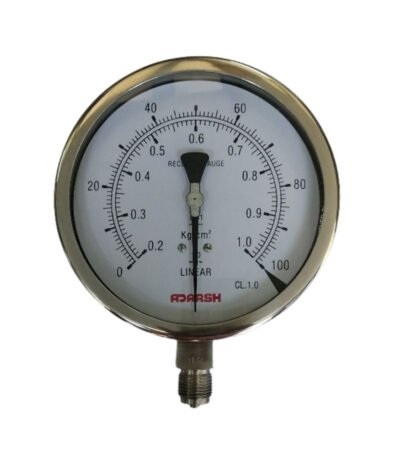
Receiver Gauge
Receiver Gauges are precision instruments designed for indication of standard pneumatic control signals of 3–15 psi (0.2–1 bar) used in process control systems. These gauges function as signal receivers for pneumatic transmitters and controllers, converting the input signal into a calibrated visual display of the measured variable.
The dial can be configured to indicate 0–100% linear output, square root scale for flow measurement, or direct engineering units, enabling clear and accurate process interpretation at a glance.
Anti-Pulsation Pressure Gauge
Anti-Pulsation Pressure Gauges are designed to handle pulsating pressure conditions typically found in systems with rapid pressure fluctuations such as pumps and compressors. These gauges provide steady and reliable readings by minimizing the effect of pressure surges and vibrations.
Antivibration Pressure Gauge
Antivibration Pressure Gauges are specifically designed for applications involving heavy vibration and mechanical shock. These gauges ensure stable readings and extended service life in rugged operating conditions.
Duplex Pressure Gauge
Duplex Pressure Gauges are designed to measure pressure at two different points using a single instrument. These gauges are commonly used where simultaneous monitoring of two independent pressure lines is required, helping in comparison, control, and operational efficiency.
Each element operates independently with separate pressure connections, while the readings are displayed on a common dial for easy observation.
Load Gauge
Load Gauges are specialized pressure gauges designed to indicate load or force by measuring the hydraulic pressure in load-bearing systems. These gauges are typically used in applications where force is directly proportional to pressure, allowing the dial to be calibrated in load units such as kg, ton, or kN instead of standard pressure units.
They are widely used in hydraulic systems where monitoring applied load is critical for safety, control, and accuracy.
Maximum Pointer Pressure Gauge
Maximum Pointer Gauges are designed to record and indicate the maximum pressure reached in a system over a period of time. In addition to the normal pointer showing live pressure, these gauges are equipped with a drag pointer (maximum pointer) that remains at the highest pressure attained until manually reset.
They are widely used in applications where monitoring peak pressure is critical for safety, testing, and performance evaluation.
Receiver Gauge
Receiver Gauges are precision instruments designed for indication of standard pneumatic control signals of 3–15 psi (0.2–1 bar) used in process control systems. These gauges function as signal receivers for pneumatic transmitters and controllers, converting the input signal into a calibrated visual display of the measured variable.
The dial can be configured to indicate 0–100% linear output, square root scale for flow measurement, or direct engineering units, enabling clear and accurate process interpretation at a glance.